
A patient came to see me after more than a year of painful, disruptive bladder symptoms following radiation treatment for prostate cancer. He had been working closely with his urologist, who was managing his care thoughtfully and thoroughly. What had not yet come up in his care was hyperbaric oxygen therapy — a treatment with one of the strongest evidence bases in wound care medicine specifically for this condition.
Once we added HBOT to his plan, he noticed significant improvement in his symptoms in as little as ten sessions.
My name is Dr. Cyrus Garmo. I am board-certified in Internal Medicine and certified in Hyperbaric Medicine through ATMO, recognized by the Undersea and Hyperbaric Medical Society. At RevitalizeMe Hyperbaric Oxygen and Wound Care in Saginaw, Michigan, we work alongside urologists, oncologists, and primary care physicians to bring this treatment option to patients who need it. I am writing this because radiation cystitis is a condition where HBOT has strong clinical support and Medicare coverage — and too many patients are still not hearing about it.
In this article:
- What radiation cystitis is and why it develops
- Why ongoing symptoms persist long after radiation ends
- How HBOT repairs radiation-damaged tissue
- What the evidence shows including CMS coverage
- What one patient experienced
- What urologists and oncologists should know about referring
What Is Radiation Cystitis and Why Does It Happen?
Radiation cystitis is inflammation and damage to the bladder wall resulting from radiation therapy to the pelvis. It most commonly affects patients who have received radiation for prostate, cervical, bladder, rectal, or other pelvic cancers.
Radiation treatment is effective at targeting cancer cells but surrounding healthy tissue, including the bladder wall, absorbs radiation dose as well. This can cause both acute effects during and shortly after treatment, and delayed effects that may not appear until months or even years after radiation is completed.
Delayed radiation cystitis develops because radiation damages the small blood vessels supplying the bladder wall. Over time this leads to progressive tissue hypoxia, scarring, and fragile new vessel formation that bleeds easily. The result can be persistent urinary urgency, frequency, pain, and bleeding that significantly affects quality of life.
Why Ongoing Symptoms Persist Long After Radiation Ends
This is the part that surprises many patients. They complete radiation, recover from the acute phase, and then months or years later begin experiencing bladder symptoms they did not expect.
Radiation causes progressive vascular damage that continues to evolve over time. The tissue becomes increasingly hypoxic as damaged blood vessels fail to supply adequate oxygen. Scar tissue forms. Fragile abnormal vessels develop in an attempt to compensate and these vessels bleed easily when disturbed.
Standard treatments for radiation cystitis focus on managing symptoms. HBOT works differently. It targets the underlying tissue environment by delivering high-concentration oxygen to chronically hypoxic tissue, supporting the formation of healthy new blood vessels, and creating conditions that allow damaged tissue to recover rather than continue to deteriorate.
How Hyperbaric Oxygen Therapy Repairs Radiation-Damaged Tissue
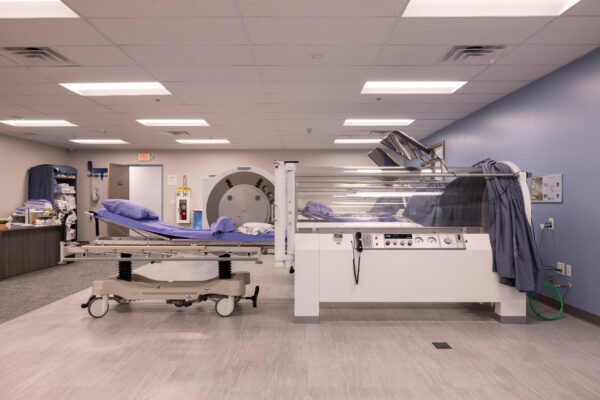
When a patient breathes 100 percent oxygen at increased atmospheric pressure in a hyperbaric chamber, the amount of dissolved oxygen in the blood plasma increases dramatically. This allows oxygen to reach tissue that is not being adequately supplied through normal circulation.
In radiation-damaged bladder tissue, this sustained oxygen delivery supports angiogenesis — the formation of new, healthy blood vessels — in tissue where the existing vasculature has been compromised. It reduces the chronic inflammatory state that drives ongoing symptoms. And it creates a tissue environment that is more capable of repair and recovery.
This is not a symptomatic treatment. It is working at the level of the tissue injury itself. That is why patients often notice meaningful improvement and why the effects tend to be durable.
What the Evidence Shows — Including CMS Coverage
Delayed radiation injury to soft tissue is a covered Medicare indication under National Coverage Determination 20.29. Radiation cystitis falls within this coverage category as a form of delayed radiation injury to soft tissue.
This means that eligible patients with radiation cystitis can access HBOT with Medicare coverage. Most major private insurance plans follow Medicare coverage standards for this indication as well, though individual plan coverage should always be verified.
The Centers for Medicare and Medicaid Services has documented the evidence base supporting HBOT for delayed radiation injury in its coverage determination. The clinical literature on HBOT for radiation cystitis includes multiple studies and systematic reviews supporting its effectiveness, particularly for hemorrhagic cystitis and symptoms that have persisted despite other management.
If you or a family member is experiencing bladder symptoms following pelvic radiation, contact RevitalizeMe Hyperbaric Oxygen and Wound Care in Saginaw. Call (989) 320-4434 or visit revitalizemehyperbaricwoundcare.com to schedule a consultation. We work directly with your urologist and oncology team.
Schedule a ConsultationWhat One Patient Experienced
The patient I described at the opening of this article had been living with urgency, frequency, and bleeding for over a year. His urologist had been managing his symptoms appropriately with the standard tools available. What had not yet been part of the conversation was HBOT.
Once we coordinated with his urologist and added hyperbaric oxygen therapy to his care plan, the change was noticeable relatively quickly. By around ten sessions he was reporting significant relief in his symptoms. He completed a full course of treatment and continued to improve.
I share this not as a promise of what any individual patient should expect. Every patient’s situation is different and individual responses to treatment vary. What I can say is that his experience is consistent with what the clinical literature describes. If you have been managing these symptoms and HBOT has not come up as part of your care discussion, it is worth raising with your urologist or calling us directly.
What Urologists and Oncologists Should Know About Referring
For urologists and oncologists reading this, we understand that radiation cystitis management involves a multidisciplinary team and that your relationship with the patient is central to their care. We work as a complementary part of that team.
When you refer a patient to us for HBOT for radiation cystitis, we conduct a thorough intake evaluation, communicate our clinical assessment back to you, and provide updates throughout the treatment course. We handle prior authorization for Medicare and work through insurance verification for private payers.
If you have a patient with delayed radiation cystitis who you believe may benefit from HBOT, we welcome a direct conversation. Call us at (989) 320-4434.
Schedule a ConsultationFAQ: HBOT for Radiation Cystitis
Does hyperbaric oxygen therapy help radiation cystitis?
HBOT is a Medicare-covered treatment for delayed radiation injury to soft tissue, which includes radiation cystitis. The clinical literature supports meaningful benefit for appropriate patients. Individual responses vary and treatment decisions should be made in consultation with your treating physicians.
Is HBOT covered by insurance for radiation cystitis?
Yes, delayed radiation injury to soft tissue including radiation cystitis is a covered indication under Medicare NCD 20.29. Most major private insurance plans cover it as well. Our team verifies coverage before treatment begins and handles prior authorization.
How many HBOT sessions does radiation cystitis require?
The number of sessions is determined based on individual clinical evaluation and in coordination with your treating physicians. A consultation will address your specific situation.
How long after radiation can HBOT still help?
HBOT for delayed radiation injury has been used in patients whose symptoms developed months or years after completing radiation. The relevant factor is the nature and severity of the tissue injury. Discuss your specific timeline and symptoms with a hyperbaric physician.
What are the symptoms of radiation cystitis?
Symptoms can include urinary urgency, frequency, pain or burning with urination, and blood in the urine. If you are experiencing these symptoms following pelvic radiation, discuss them with your urologist or primary care physician. Do not self-diagnose or delay seeking medical evaluation.
— Dr. Cyrus Garmo, MD
Board-Certified Internal Medicine | Certified Hyperbaric Medicine, ATMO/UHMS
RevitalizeMe Hyperbaric Oxygen and Wound Care, Saginaw, MI
Individual results vary. This article is for informational purposes only and does not constitute medical advice. Please consult your physician regarding your individual care.