Your body already has remarkable capacity to heal from surgery. Hyperbaric oxygen therapy works by supporting that capacity at the cellular level — and a growing number of plastic surgeons and their patients are incorporating it into recovery plans for a range of procedures.
My name is Dr. Cyrus Garmo. I am board-certified in Internal Medicine and certified in Hyperbaric Medicine through ATMO, recognized by the Undersea and Hyperbaric Medical Society. At RevitalizeMe Hyperbaric Oxygen and Wound Care in Saginaw, Michigan, we work with patients who are preparing for or recovering from surgical procedures and want to give their healing process every appropriate advantage.
In this article:
- Why surgical wounds sometimes struggle to heal
- How HBOT supports the body’s healing processes
- Which plastic surgery procedures may benefit
- Before surgery, after surgery, or both
- What plastic surgeons should know about referring
- What to expect at RevitalizeMe
Why Surgical Wounds Sometimes Struggle to Heal
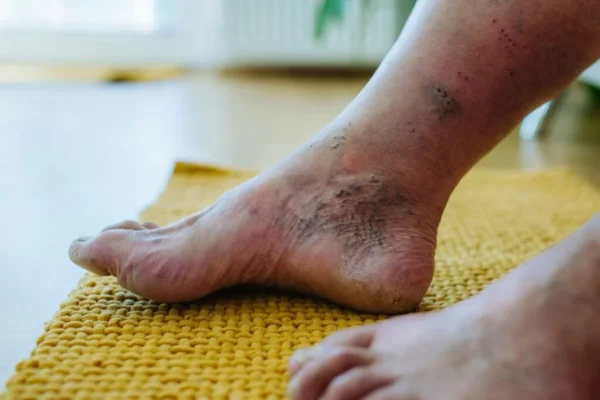
Most surgical wounds heal without significant complication. But for certain patients and certain procedures, the healing process does not go as smoothly as expected.
Tissue that has been surgically manipulated, stretched, or repositioned may have temporarily reduced blood supply as it establishes new vascular connections. Flaps — areas of tissue moved from one location to another during reconstructive procedures — are particularly dependent on establishing adequate blood flow quickly. If oxygenation to the tissue is compromised during the critical early healing period, wound breakdown, partial flap loss, or poor scar formation can result.
Patient factors also play a role. Smoking, diabetes, vascular disease, and certain medications can all impair the body’s healing response. For compromised skin grafts and flaps specifically, hyperbaric oxygen therapy is a covered Medicare indication under National Coverage Determination 20.29.
How HBOT Supports the Body’s Healing Processes
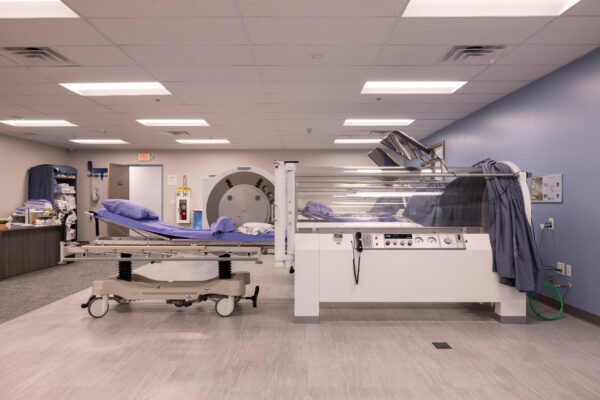
At increased atmospheric pressure, breathing 100 percent oxygen dramatically raises the concentration of dissolved oxygen in the blood plasma. This allows oxygen to reach tissues through plasma diffusion rather than relying solely on red blood cell delivery — which is particularly relevant when blood flow to a surgical area is temporarily reduced.
The elevated oxygen environment supports several processes relevant to surgical recovery. It promotes angiogenesis — the formation of new blood vessels — which is important for establishing blood supply to repositioned or grafted tissue. It supports collagen synthesis, which is the structural protein that forms the scaffold of healing tissue. It reduces swelling and creates a tissue environment that is less hospitable to certain types of infection.
Research has also explored HBOT’s role in mobilizing the body’s own regenerative cells from the bone marrow. This is an active area of scientific interest and while the findings are promising, I want to be transparent that this research is still developing. What is established is the mechanism around oxygen delivery, angiogenesis, and collagen synthesis — and those mechanisms are directly relevant to surgical wound healing.
Which Plastic Surgery Procedures May Benefit
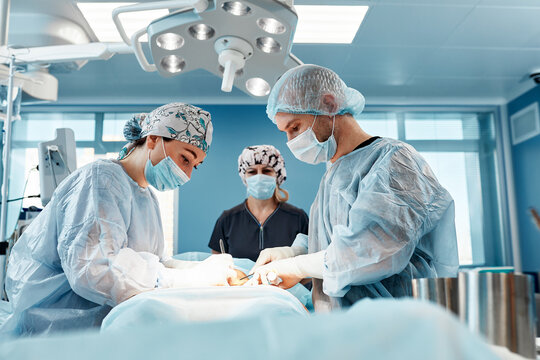
The procedures where HBOT has the most established clinical support in the surgical context are those involving tissue flaps and grafts — where the blood supply to repositioned or transplanted tissue is the central concern. This includes breast reconstruction using flaps, reconstructive procedures following cancer surgery, and complex facial reconstruction.
Beyond the Medicare-covered flap and graft indication, plastic surgeons and patients are also exploring HBOT as a recovery support for a broader range of procedures including breast reductions, abdominoplasty, panniculectomy, and other body contouring procedures.
For procedures outside the Medicare-covered flap and graft indication, coverage varies by insurer and individual plan. Our team will verify your specific coverage before any treatment begins.
If you are preparing for or recovering from a plastic surgery procedure and want to explore whether HBOT is appropriate for your situation, contact RevitalizeMe Hyperbaric Oxygen and Wound Care in Saginaw. Call (989) 320-4434 or visit revitalizemehyperbaricwoundcare.com. We work directly with your surgical team.
Schedule a ConsultationBefore Surgery, After Surgery, or Both
The timing of HBOT in relation to surgery depends on the clinical situation and should be determined in coordination with your surgical team.
For patients with compromised grafts or flaps showing signs of poor healing post-operatively, HBOT is typically initiated as soon as possible after the issue is identified. Some plastic surgeons incorporate pre-operative HBOT for patients identified as higher risk for healing complications — patients who smoke, have diabetes, or have had prior radiation to the surgical area.
Post-operative HBOT is the more common application, supporting the tissue through the critical early healing period. The number of sessions and timing are determined based on the individual clinical picture in coordination with the operating surgeon.
What Plastic Surgeons Should Know About Referring
For plastic surgeons reading this, we understand that you are the central provider in your patient’s surgical recovery and we work within that relationship. When you refer a patient to us, we conduct a thorough evaluation, communicate our assessment back to you, and keep you informed throughout the treatment course.
We handle insurance authorization for the Medicare-covered flap and graft indication and work through private insurance verification for other cases. We are also available for pre-operative consultations for patients you identify as higher healing risk.
Physician-to-physician conversations are always welcome. Call us at (989) 320-4434.
Schedule a ConsultationFAQ: HBOT and Plastic Surgery Recovery
Does hyperbaric oxygen therapy help after plastic surgery?
For compromised skin grafts and flaps specifically, HBOT is a Medicare-covered treatment with established clinical support. For other plastic surgery procedures, the evidence is evolving and coverage varies. The appropriateness of HBOT for your specific situation should be discussed with your surgeon and a hyperbaric physician.
When should I start HBOT after surgery?
Timing depends on your specific situation and should be determined in coordination with your surgical team. For compromised grafts or flaps, earlier intervention is generally better. A consultation with our center can help establish appropriate timing based on your clinical picture.
Does insurance cover HBOT for plastic surgery recovery?
Compromised skin grafts and flaps are a covered Medicare indication under NCD 20.29. For other plastic surgery recovery applications, coverage varies by insurer and plan. Our team verifies coverage before treatment begins.
How does HBOT support tissue healing after surgery?
HBOT dramatically increases dissolved oxygen in the blood plasma, supporting oxygen delivery to tissue with temporarily reduced blood supply. It promotes angiogenesis, supports collagen synthesis, and reduces inflammation — all relevant to surgical wound healing. Research into additional cellular mechanisms is ongoing.
How many HBOT sessions do I need after surgery?
The number of sessions is determined based on individual clinical evaluation in coordination with your surgical team. This varies by procedure, the nature of the healing concern, and your individual response to treatment. A consultation will address your specific situation.
— Dr. Cyrus Garmo, MD
Board-Certified Internal Medicine | Certified Hyperbaric Medicine, ATMO/UHMS
RevitalizeMe Hyperbaric Oxygen and Wound Care, Saginaw, MI
Individual results vary. This article is for informational purposes only and does not constitute medical advice. Please consult your physician regarding your individual care.